
 By
By 
You catch it in photos first. One front tooth looks shorter, flatter, or slightly off center, and once you see it, you keep seeing it. Smiling feels different. You may start wondering whether the tooth is cracking down, whether the other front tooth will follow, or whether fixing it means a long list of expensive treatment. That reaction is normal. A single worn front tooth can change the whole balance of your smile, and it often affects confidence long before it causes pain. Cosmetic dental crowns Lancaster CA can be one option to restore balance and appearance.
The good news is that family and cosmetic dentists rebuild smile symmetry by figuring out why that one tooth wore faster, then choosing the least aggressive way to restore shape, strength, and balance. Sometimes that means polishing and bonding. Sometimes it means adjusting a bite that has been pushing one tooth too hard for years. In some cases, it means veneers or crowns. The right answer depends on the wear pattern, the enamel left, and what your bite is doing every day and every night.
One Front Tooth Often Wears Faster for a Reason
Front teeth do not usually wear unevenly by chance. One tooth may take more force because your bite lands there first. You may clench when you sleep, grind during stress, or chew in a way that shifts pressure to one side. Acid wear can also soften enamel, which makes one edge break down faster over time. The University of Bristol explains that tooth wear can come from grinding, abrasion, and acid erosion, and many people have more than one cause at the same time.
That mix is why a quick cosmetic fix does not always hold up. If a dentist simply adds material to a worn edge without checking your bite, the repair may chip because the same force that wore the tooth down is still there. You do not just need the tooth to look even. You need it to function evenly.
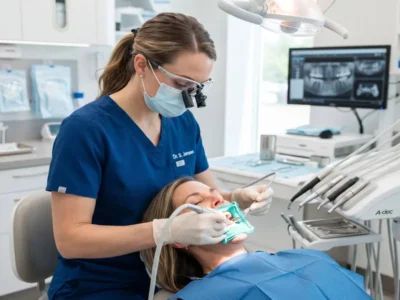
This is where a dentist starts acting like both a mechanic and an artist. They look at tooth length, edge position, gum line, enamel thickness, jaw movement, and contact points between upper and lower teeth. If one central incisor has worn faster, they compare it to the matching tooth, but they also look at the canines and the back teeth. A front tooth often tells the story of the whole bite.
Rebuilding Front Tooth Symmetry Means Treating Wear and the Cause
When the wear is mild, reshaping and tooth colored bonding can restore the edge in one visit. Bonding is often the first step for a shorter front tooth because it preserves natural tooth structure and lets the dentist rebuild small details with precision. It can be a smart choice when the tooth is healthy and the goal is to replace a bit of lost length.
When the tooth has more damage, a veneer or crown may be the better option. Veneers cover the front surface and work well when the issue is visible wear, shape change, or discoloration. Crowns are used when the tooth needs more full coverage support. For some people, the fix also includes bite adjustment or a night guard to protect the result. Research published in the National Library of Medicine notes that tooth wear is common and often linked to multiple mechanical and chemical factors, which is why careful diagnosis matters before treatment.
You may be hoping the solution is only cosmetic, but a worn front tooth can signal deeper stress on your teeth. If you ignore it, the opposite front tooth may start compensating, fillings may fail, or the worn tooth may become more sensitive. Fluoride can help strengthen enamel and reduce decay risk, especially if acid exposure is part of the problem. The National Institute of Dental and Craniofacial Research explains how fluoride supports enamel and helps prevent cavities, which can matter when worn teeth have thinner protective layers.
Professional Repair Options Give Different Levels of Protection and Change
| Option | Best For | Pros | Limits |
|---|---|---|---|
| Minor reshaping | Very small uneven edges | Fast, conservative, low cost | Only works when little structure is missing |
| Composite bonding | Small to moderate front tooth wear | Natural look, preserves tooth, often done in one visit | Can chip or stain over time if bite pressure is high |
| Porcelain veneer | Visible wear with shape or color concerns | Strong appearance upgrade, smooth finish, stable color | Needs planning and some tooth preparation |
| Crown | Heavier wear or weakened tooth structure | More coverage and protection | More invasive than bonding or veneers |
| Night guard with restoration | Clenching or grinding cases | Protects new dental work and natural teeth | Does not correct appearance by itself |
Repairing an uneven worn front tooth is rarely about one material being best for everyone. A teacher who grinds at night, drinks sparkling water all day, and wants a low cost fix may do well with bonding plus a night guard. Someone with deeper wear, old fillings, and a high smile line may need porcelain for a stable match. The right plan fits your enamel, your bite, and your budget.
Small Next Steps Can Protect Your Smile Before the Wear Gets Worse
Take clear photos and compare old ones. Stand in natural light, smile normally, and take a close photo of your front teeth. If you have older photos, compare them. A change in tooth length, edge shape, or tilt helps show whether the wear is active or has been stable.
Track habits that may be feeding the damage. Notice morning jaw soreness, headaches, nail biting, ice chewing, reflux, frequent acidic drinks, or a tendency to hold tension in your face. These details help explain why one tooth is wearing faster and can save time during an exam.
Book a general and cosmetic dental and medical spa evaluation before the tooth chips more. Ask for a bite check, wear assessment, and a breakdown of conservative versus longer term options. If one front tooth looks shorter now, early care usually gives you more choices and smaller repairs.
Balanced, Natural Looking Results Start With the Right Diagnosis
A single worn front tooth can make your whole smile feel off, but it is a fixable problem. The goal is not just to make one tooth longer. The goal is to restore symmetry, protect the enamel you still have, and stop the wear pattern from repeating. Front tooth wear treatment works best when appearance and function are rebuilt together.
If your smile has started to look uneven, do not wait for a crack or a bigger cosmetic change to force the issue. Schedule an evaluation with a provider offering General And Cosmetic Dental And Medical Spa services and get a plan that restores balance in a way that looks natural and lasts.










Comments